

Introduction
In the vast tapestry of mythology“>Greek mythology, few figures stand out as vividly as the serpent defeated by Apollo. This mythological creature holds a significant place in ancient stories, embodying chaos and darkness. As legends tell, a great battle between good and evil unfolded around this serpent, highlighting the struggle between divine power and malice.
Serpent mythology surfaces in numerous cultures across the globe. In many ancient societies, snakes often symbolize rebirth, fertility, or destruction. The dual nature of these creatures can be seen in various myths, demonstrating humanity’s intrigue and fear of these slippery beings. Specifically, the legend of Apollo’s confrontation reveals themes of prophecy and divine intervention, which were essential aspects of daily life in ancient times.
Delphi, a site revered for its oracle, emerges as a key location within this tale. According to the lore, the oracle served as a bridge between mortals and the divine. Pythia, the high priestess, shared messages from the gods, casting a light upon the future. As part of this narrative, the serpent posed a formidable threat to both the oracle’s sacredness and the people’s faith.
Guided by Zeus’s command and driven by a prophetic vision, Apollo’s journey to slay the serpent became one for the ages. Strumming his Lyre, the god of music prepared to face this fearsome beast. Victory over Python secured Apollo’s role as a protector of humanity and bestowed upon him a powerful legacy that continues to resonate within classical myths.
This story encapsulates the essential battle between order and chaos, a theme echoed throughout many ancient tales. The defeat of the serpent marked not just a triumph for Apollo but also signified the dawn of a new era for the oracle at Delphi, shaping the cultural heritage of Greece for centuries to come.
The Myth of Python

In Greek mythology, the gigantic serpent served as a prominent figure. This creature is often depicted as a monstrous and fearsome being that dwelled in the region of Delphi. Legends tell us that it was born from the earth, directly connected to the sacred lands where many significant events unfolded. As stories continue from generation to generation, it becomes clear that this serpent played a crucial role in the ancient world.
Delphi is not just any place; it is known for its rich history and mythical significance. The site became the home of the famous oracle, Pythia, who delivered prophecies that guided many leaders and individuals. Here, the serpent guarded the temple and the sacred oracle. Visitors often sought guidance from Pythia, unaware of the dangers that lurked nearby. The protector of the oracle was Python, watching over the divine revelations that were about to unfold.
Protective instincts defined Python’s role at Delphi. This mythological creature was not just a beast; it symbolized a barrier between mortals and divine wisdom. Only the most courageous would approach the oracle, knowing that they had to face the fearsome guardian. Many clients came seeking knowledge or answers to their dilemmas, but they had to navigate past the relentless threats posed by the serpent.
In connection with these elements, a significant prophecy emerged. Zeus, the king of gods, had declared that a new beginning awaited the oracle. Apollo, known for his many talents including music, would eventually confront Python. Their encounter would mark a pivotal upheaval in Delphi’s sacred narrative. The prophecy detailed how Apollo would slay the serpent, claiming the oracle for himself and bringing forth a new era of enlightenment through the Lyre’s music.
This transformation would change the fate of Delphi forever. After defeating the great serpent, Apollo took on the role of the oracle’s protector. As a result, he became the center of worship in the region. While the frightening serpent faded from memory, the legacy of its existence and the stories surrounding it remained crucial parts of classical myths. Visitors to Delphi often recall this tale, highlighting the intricate relationship between gods, mythical beings, and humanity.
Apollo’s Birth and the Defeat of Python
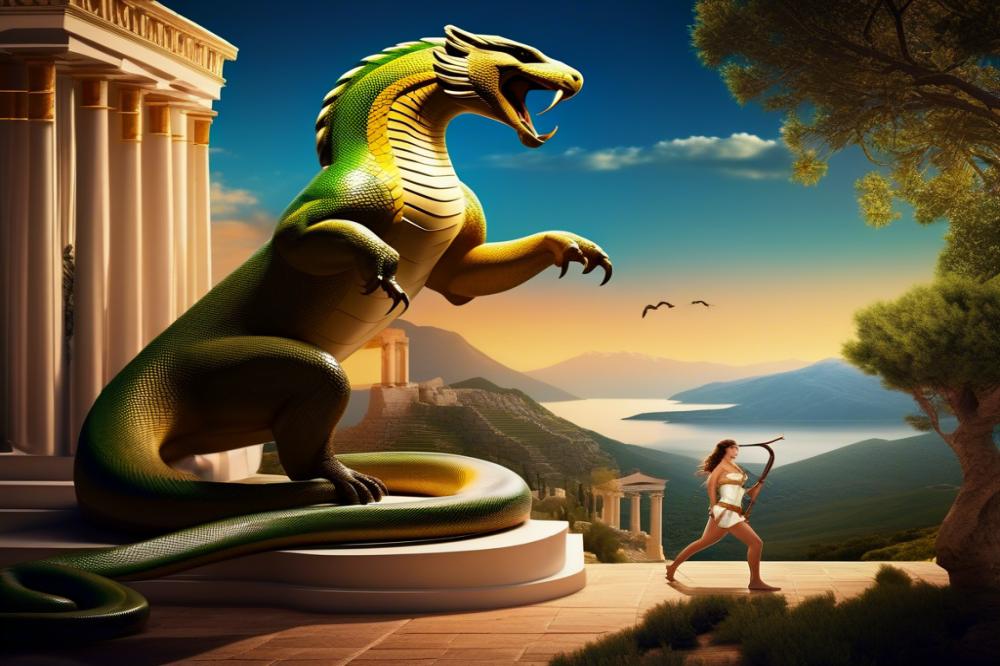
Apollo is one of the most important gods in Greek mythology. He is known for his divine attributes like music, prophecy, and healing. As the son of Zeus and the Titaness Leto, his birth carries great significance. Leto faced many challenges while pregnant, primarily from the jealous goddess Hera. She was determined to stop Leto from giving birth. Eventually, Leto found an island called Delos, where the birth could happen safely.
Something significant occurred shortly after Apollo’s birth. To establish himself as a powerful god, he needed to confront a formidable adversary. This led to his conquest of a serpent, a mythological creature infamous for terrorizing the land. The serpent guarded a sanctuary near Delphi, which was revered for its oracle. This location would become crucial for Apollo’s future role as the god of prophecy.
The battle at Delphi was legendary. In a fierce confrontation, Apollo wielded his bow and arrows. With unmatched skill, he struck the serpent down. Many versions of the myth describe how he sang enchanting melodies on his lyre during the fight. These notes echoed across the valley, making Apollo’s victory even more extraordinary. Once victorious, he claimed Delphi as his sacred space.
This triumph holds immense significance in classical myths. It marked the establishment of the oracle of Delphi, where Pythia would later deliver prophecies. Apollo’s victory over the serpent symbolizes the triumph of order and civilization over chaos and a dangerous past. His emergence as a major god became pivotal for the Greek pantheon. Henceforth, he was not just a deity of music but also a guardian of truth and enlightenment.
The Legacy of Python and the Oracle of Delphi
The Transformation of the Oracle of Delphi
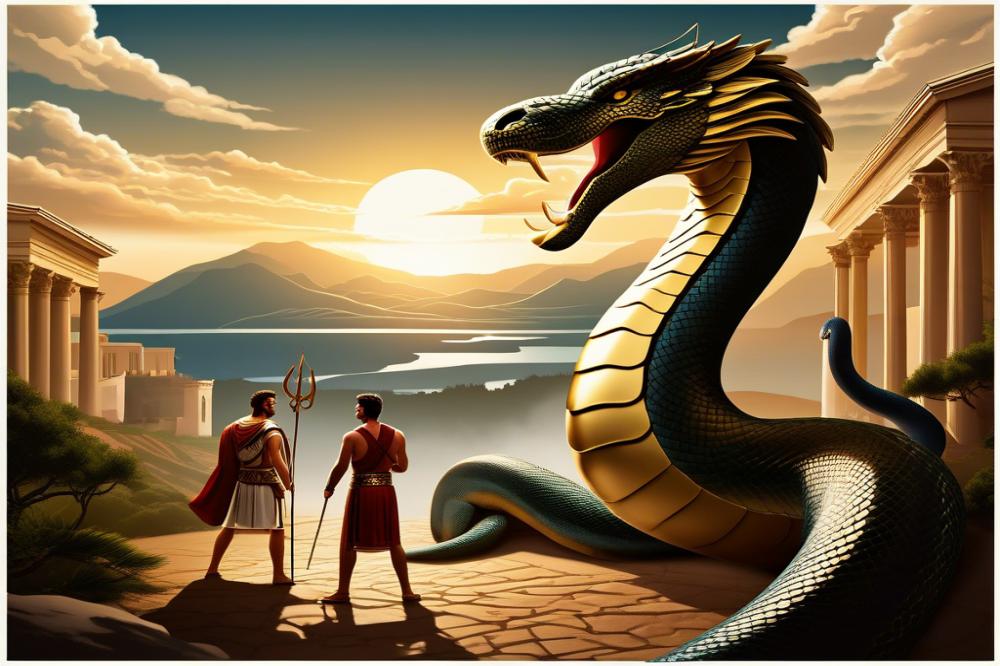
The story of the Oracle of Delphi dramatically changed after Apollo’s victory over the serpent. Initially, this sacred site was linked to the ominous creature that inspired fear in many. Following Apollo’s triumph, however, the focus evolved. The oracle became a symbol of hope, shedding its dark past. Now, it served as a voice for Apollo, guiding the people through his prophecies.
The Role of Pythia as Priestess of Apollo
At the center of this transformation was Pythia, the priestess. Her role was to deliver messages from the god. Seated on a tripod, she breathed in the vapors from underground fissures. Many who came to seek advice believed she was possessed by Apollo. This connection made Pythia an essential figure in Greek mythology. Rulers, warriors, and common folk sought her insights, hoping to gain an advantage in their endeavors.
Influence of Python’s Defeat on Greek Religious Practices
Apollo’s conquest had far-reaching effects on religious customs. With the serpent’s defeat, rituals associated with the site shifted. The feeling of dread that once enveloped Delphi slowly faded. New festivals began to honor Apollo, celebrating his role as the god of music, prophecy, and healing. The Pythian Games, similar to the Olympics, soon emerged as a cultural event, blending athletics with religious devotion. These changes reshaped how people approached worship and divination.
Connection Between Python, Delphi, and Apollonian Culture
Python, as a mythological creature, holds a pivotal place in understanding Delphi’s significance. The site became a cultural hub tied to Apollo’s identity. Artistic expressions flourished, especially in music, as seen with the lyre. Temples rose to honor the god, and Delphi became a must-visit location for pilgrims. Through this blend of myth and ritual, the story of Apollo and the serpent intertwined with Greek identity, showcasing the deep connections between their beliefs and practices.
Mythological Significance and Cultural Impact
The serpent defeated by Apollo in Greek mythology symbolizes chaos and primal forces. This creature represents the dark and unpredictable aspects of nature. As an embodiment of these chaotic elements, it creates a stark contrast to the order and light brought by the sun god.
In many classical myths, serpents serve as guardians of treasures or wisdom. Comparisons can be drawn with figures from various cultures. From the biblical serpent in Eden to the dragon in Chinese lore, these mythological beings often signify a struggle between good and evil. Each tale carries its own lessons about power and morality.
The Lyre and Apollo’s Triumph
Apollo’s creation of the Lyre adds a rich layer to his victory. Legend states he fashioned this musical instrument from the shell of a turtle, marking his conquest over chaos. Music became a symbol of culture, harmony, and the arts. Because of this, the Lyre’s connection to Apollo elevates the narrative beyond mere combat. It becomes a tool for the divine, linking him to the oracle at Delphi.
The oracle, known as Pythia, was situated in a sacred place where prophecies flowed freely. Apollo’s victory transformed the site into a center of wisdom. The defeat of the mythological creature allowed access to divine insight. As a result, the role of the oracle gained immense importance within Greek society.
Enduring Legacy
Cultural impact extends into art, literature, and modern interpretations. Artists have depicted the serpent’s defeat in countless paintings and sculptures. Writers weave this tale into stories that resonate through centuries. Today, echoes of this myth can still be felt, inspiring works in various forms. Movies and books often draw on these ancient themes, reminding us of their relevance.
Through the ages, the story illustrates humanity’s continuous battle against chaos. With the mythical creature serving as a reminder, societies reflect on their struggles for order, knowledge, and meaning. Apollo’s triumph reassures us that light can prevail in dark times, and mythological narratives endure in the fabric of our shared cultural history.
Final Thoughts on the Serpent’s Legacy
In Greek mythology, the serpent played a crucial role as a symbol of chaos and obstruction. The tale of Apollo and the serpent embodies the struggle between order and chaos. This myth captures the profound battle between the divine and the monstrous. Such stories resonate deeply within the fabric of ancient culture.
Prophecies guided many events in these tales. The prediction surrounding Apollo’s defeat of his fearsome foe illustrates how fate intertwined with human action. When Apollo vanquished the serpent, it marked a turning point. This act not only demonstrated his strength but also emphasized the importance of knowledge and foresight.
Considering its cultural significance, the myth offers lessons that echo through time. The story remains a potent reminder of the eternal conflict between good and evil. It teaches about bravery, wisdom, and the consequences of one’s actions within society.
Ultimately, the serpent’s story leaves a lasting impact on the understanding of classical myths. Its imagery and themes continue to inspire literature and art. New generations discover these ancient tales, revealing timeless truths. Appreciating such narratives fosters a rich understanding of human experience, adapting throughout modern culture.

